Craft · Trend · 30 Oct 2026
Visible mending goes mainstream, and the big brands are picking up needles
From felted bees over moth holes to Sashiko-style stitching at Uniqlo, repairs that show off rather than hide are moving from craft circles to the high street.
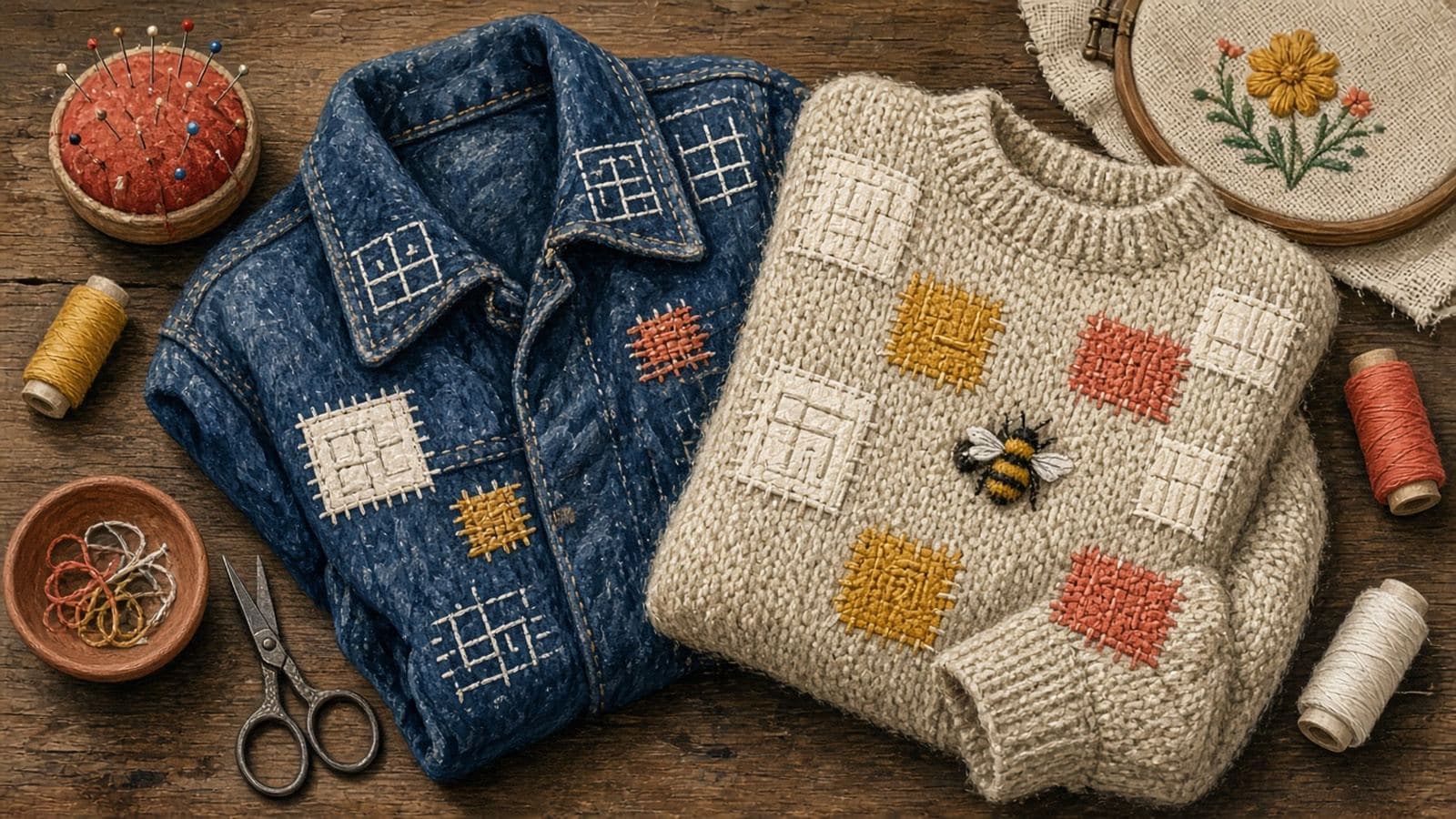
Illustration: FeelArtsy Studio (AI-assisted)
There was a time when a good repair was an invisible one. That time seems to be ending. In a BBC report published on 30 October, Lucy Hooker followed visible mending from the craft table into the shop floor. Repairs that celebrate the damage, rather than hide it, are becoming a style statement and a business line.
The menders
The report opens with Alice Brown, a 27-year-old forest ranger from Lincolnshire. She hides moth holes and stains under needle-felted animals and insects, and the style has won her a big online following. She treats an awkward hole under the arm as a design challenge rather than a reason to pass on a second-hand jumper.
In Brighton, Jayne Eagle teaches mending inspired by the Japanese traditions of Boro and Sashiko. Boro means layered patches and Sashiko means running stitches, both originally ways to make cloth last. She uses big white geometric stitches instead of matching the thread to the garment. By her account, interest took off about six years ago and has boomed since. She sees it as a backlash against fashion's overproduction.
The brands
What makes this a trend rather than a hobby is who else is involved.
- Uniqlo offers Sashiko-style mending.
- Primark has joined in too. Its longevity lead argues that affordable and durable shouldn't be opposites.
- Finisterre, the outdoor brand, says around a fifth of the mends it does for customers are designed to stand out.
- At Toast, around a third of customers choose a visible mend, and the repair service is free.
- Levi's is rolling out a workshop programme this year, though for now it focuses on basics like buttons and hems. Some of the young participants the BBC met still preferred their mends hidden.
Not everyone is convinced yet, but together these brands signal that a patched knee no longer reads as "can't afford new". It reads as "cares about this".
Why it's catching on
Several things are converging. Mending used to be about saving money; now it is also a way of showing you chose to keep something. People who sit at screens all day are hungry for slow, tactile hobbies. Searches for embroidery and sewing are climbing fast, as we reported earlier this autumn. And visible mending is very forgiving for beginners: wobbly stitches are part of the charm.
Start small
You need a darning needle, some contrasting thread (white on indigo is the classic) and something worth saving. A simple grid of running stitches over a patch is the traditional starting point. Don't aim for perfect. Aim for even and generous.
For inspiration, look to indigo and folk patterns: deep blues, cream stitches, flashes of red. They're the visual language of mending, and they look just as good framed on a wall as stitched on a knee.
Palette
- #2C4A7E
- #F2E8D5
- #D94F30
- #E8B04B
- #6B8F71
Sources
Written by FeelArtsy in our own words. AI may assist the draft. A person reviews it before it is published. See the editorial policy.
From the shop
Prints related to this story. House lines, designed by FeelArtsy Studio.

Indigo Arcs Art Print
Still Form
€24.00
A FeelArtsy Studio line

Indigo Tide Canvas
Field Pigment
€59.00
A FeelArtsy Studio line
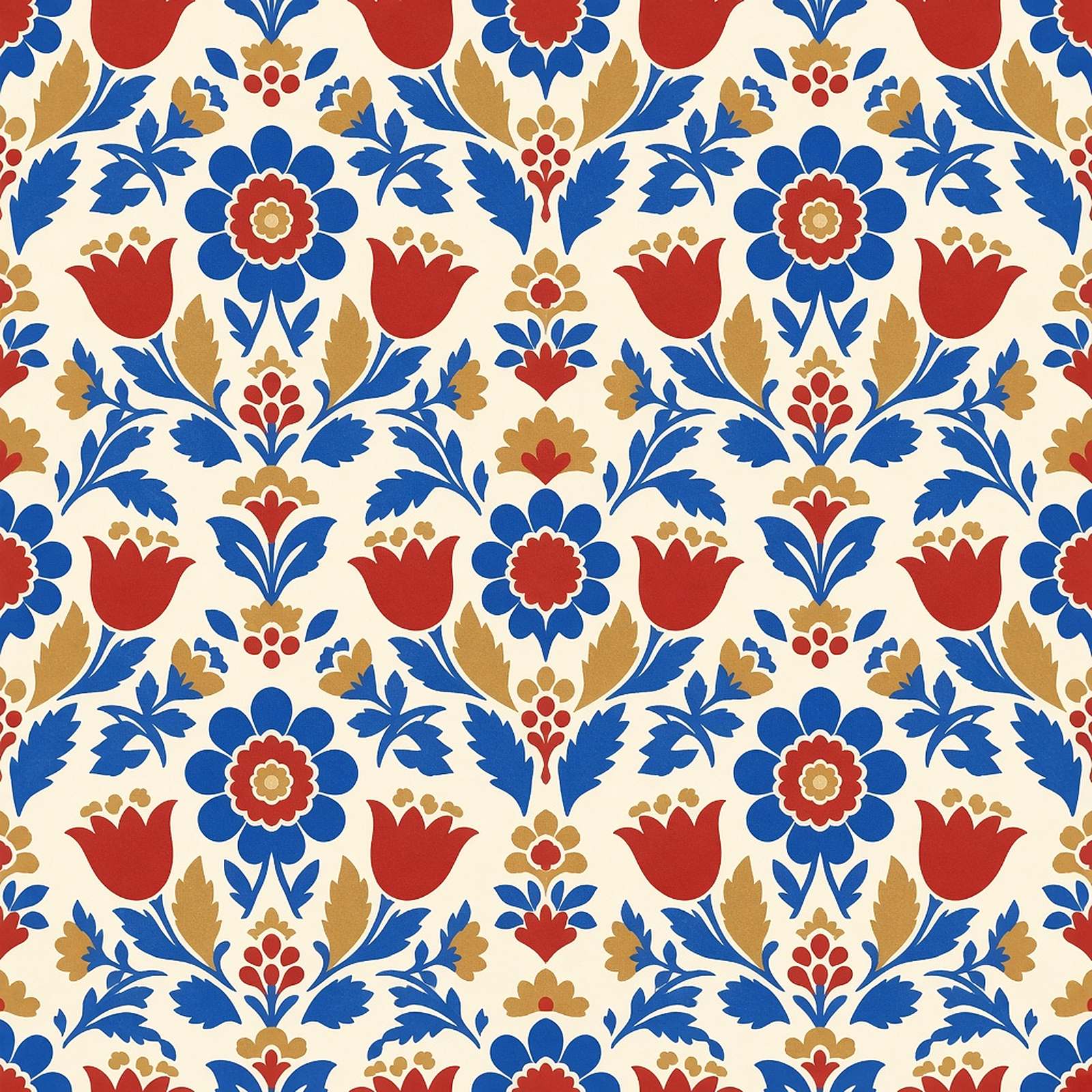
Folk Bloom Art Print
Still Form
€24.00
A FeelArtsy Studio line

Get the weekly trend letter
One letter a week on art, design, science, and what we printed from it. We store your address as pending and send a confirmation before the first letter. That confirmation email is not going out yet.