Science · News · 16 Sept 2026
A museum drawer, a tusked plant-eater and a rethink of the first dinosaurs
Fossils collected in Tanzania in 1963 turn out to be a new species of Dinodontosaurus, a genus known only from South America, and the find may make Africa's 'oldest dinosaurs' younger.
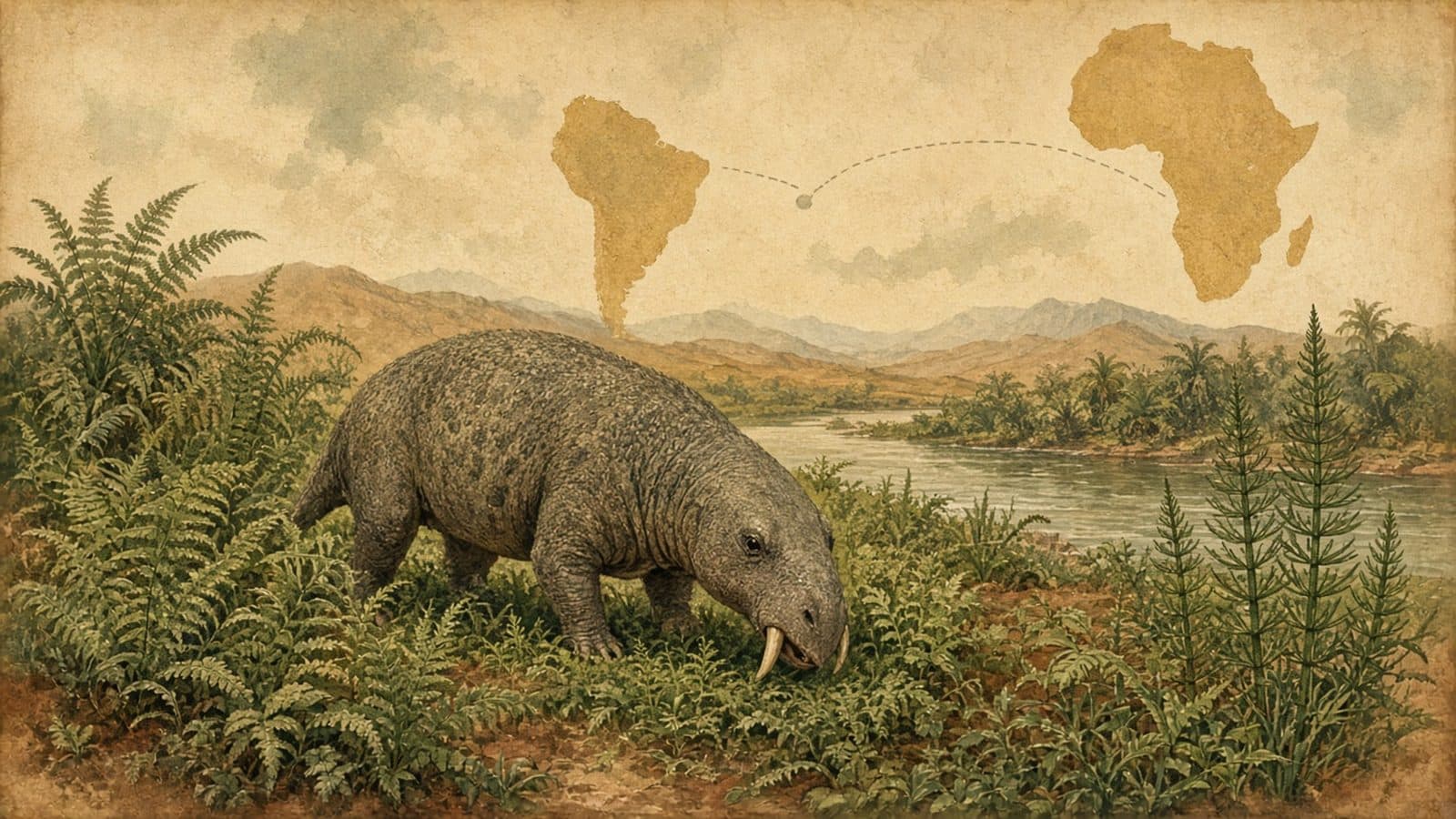
Illustration: FeelArtsy Studio (AI-assisted)
Not every discovery starts with a shovel. Some start with a label in a museum store. On 16 September, a team led by the University of Bristol described a new species of prehistoric animal from Tanzania, about 240 million years old. They found it among fossils that had been sitting in London's Natural History Museum for more than six decades.
Meet the animal
The new species is called *Dinodontosaurus isiyavamanda. It was a dicynodont, part of a group of plant-eating synapsids. Synapsids are on the same branch of the family tree as mammals, and they flourished before dinosaurs took over. Dicynodonts are easy to spot in reconstructions: stocky bodies, a beak and, often, a pair of tusks. The species name refers to the land of the Wamanda people*, who live in the part of Tanzania where the fossils were found.
The bones were collected by a British expedition in 1963. They were only partly studied, though. The team looked at one undescribed skeleton together with a fragment of skull found more recently. They realised the animal belonged to Dinodontosaurus, a genus previously known only from South America, and that it was a new species.
Why it matters for dinosaurs
This is where it gets interesting. The Tanzanian rocks that held the fossil have also produced some of the oldest possible dinosaur fossils anywhere. Their age was estimated partly by comparison with rocks in South Africa.
Dinodontosaurus now links the Tanzanian beds to rock sequences in South America instead. Recent radiometric dating suggests the South American rocks are up to 10 million years younger than the South African ones. If the Tanzanian beds are the same age, then Tanzania's candidate early dinosaurs are probably no older than South America's. That nudges the timeline of dinosaur origins.
A thirty-year wait
There's a lovely human thread here too. One co-author, Nigel Larkin, first studied the skeleton for his master's thesis in 1994 and suspected it was new to science. Three decades later, with micro-CT scanning and a large international team, the description is finally out. The lead author is Bristol PhD student Hady George. The paper is published, open access, in the Journal of Vertebrate Paleontology.
The museum lesson
The Natural History Museum's curator made the point well: going back to old collections can change our picture of the past as much as new fieldwork. Museum stores are, in a sense, unexplored landscapes.
If prehistoric life inspires your walls, look for ancient tones like ochre, fern green and red earth. They're the colours of a Triassic riverbank, and they work surprisingly well in modern rooms.
Palette
- #C58B4E
- #8A9A5B
- #B5523B
- #EFE3C8
- #4B3B2A
Sources
- New species of 240-million-year-old prehistoric animal from Tanzania discovered · University of Bristol
Written by FeelArtsy in our own words. AI may assist the draft. A person reviews it before it is published. See the editorial policy.
From the shop
Prints related to this story. House lines, designed by FeelArtsy Studio.
Fern Unfurling Art Print
Field Pigment
€22.00
A FeelArtsy Studio line
Ochre Fields Canvas
Field Pigment
€59.00
A FeelArtsy Studio line
Terracotta Forms Art Print
Field Pigment
€22.00
A FeelArtsy Studio line

Get the weekly trend letter
One letter a week on art, design, science, and what we printed from it. We store your address as pending and send a confirmation before the first letter. That confirmation email is not going out yet.