Science · News · 23 Sept 2026
Arctic sea ice bottoms out for 2026, and the twenty lowest years are now the last twenty
The National Snow and Ice Data Center reports a summer minimum tied for tenth lowest on record, while Antarctic ice looks set for one of its smallest winter peaks.
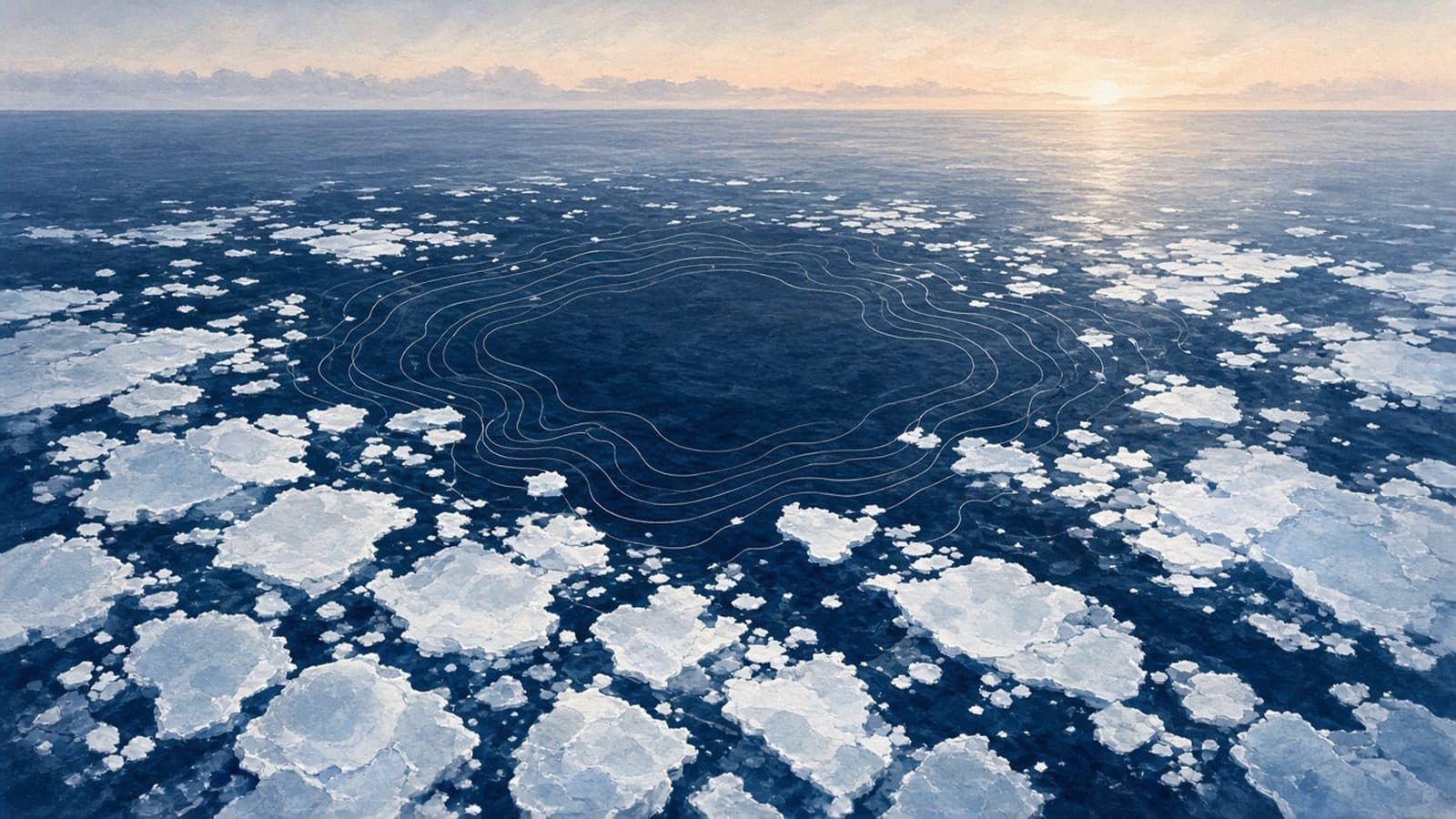
Illustration: FeelArtsy Studio (AI-assisted)
Every September the Arctic Ocean reaches a turning point. The summer melt slows, stops, and the ice starts to grow again. On 23 September the US National Snow and Ice Data Center (NSIDC) announced that the turn had come.
The numbers
Arctic sea ice reached its 2026 minimum on 12 September, at 4.60 million square kilometres. That's the tenth-lowest minimum in the satellite record, tied with 2008, 2010 and 2025.
Tenth lowest sounds almost reassuring until you see the bigger pattern NSIDC points out. The last twenty years are the twenty lowest minimums on record. The ice isn't collapsing to a new record every year. Instead, it has settled onto a much lower level than the one people grew up with.
At the other end of the planet it's the end of winter. NSIDC says Antarctic sea ice most likely reached its maximum on 14 September, at about 17.59 million square kilometres. If that holds, it would be the third-lowest winter peak on record. For years Antarctica's ice seemed oddly resistant to warming. Recent seasons suggest that's changing, though scientists are careful about reading too much into a few years.
Why the ice matters
Sea ice is more than a thermometer. Its white surface reflects sunlight. When it's replaced by dark open water, the ocean absorbs more heat and warming speeds up. The ice shapes weather patterns, supports ecosystems from algae to polar bears, and is part of the daily lives of Arctic communities.
Seeing it
Satellite maps of sea ice are some of the most beautiful scientific graphics there are: whites shading into pale blue, with a ragged edge against deep navy water. They're also some of the most sobering. Artists have long been drawn to that tension, using the cool palette of ice and ocean to make climate change feel present rather than abstract.
What you can take from it
A single season doesn't tell the whole story, which is exactly NSIDC's point. It's the long run of years that matters. If seascapes and icy blues speak to you, let them be a gentle daily reminder of how much the world's coldest places matter to the rest of us.
Palette
- #F4F8FB
- #A9CCE3
- #1B3A5C
- #0E1F33
- #F6D3B8
Sources
- Arctic sea ice has reached minimum extent for 2026; Antarctic sea ice maximum most likely reached as well · National Snow and Ice Data Center
Written by FeelArtsy in our own words. AI may assist the draft. A person reviews it before it is published. See the editorial policy.
From the shop
Prints related to this story. House lines, designed by FeelArtsy Studio.
North Sea Swell Canvas
Field Pigment
€59.00
A FeelArtsy Studio line

Alpine Lake Canvas
Field Pigment
€59.00
A FeelArtsy Studio line
Blue Hour Lake Canvas
Field Pigment
€59.00
A FeelArtsy Studio line

Get the weekly trend letter
One letter a week on art, design, science, and what we printed from it. We store your address as pending and send a confirmation before the first letter. That confirmation email is not going out yet.