Tech · Trend · 6 Oct 2026
AI tools that meet makers halfway: Comfy Agent and Flow Music's DIY plug-ins
Two launches in a week suggest a shift: instead of generating finished work, AI is starting to help creators build and repair their own tools.
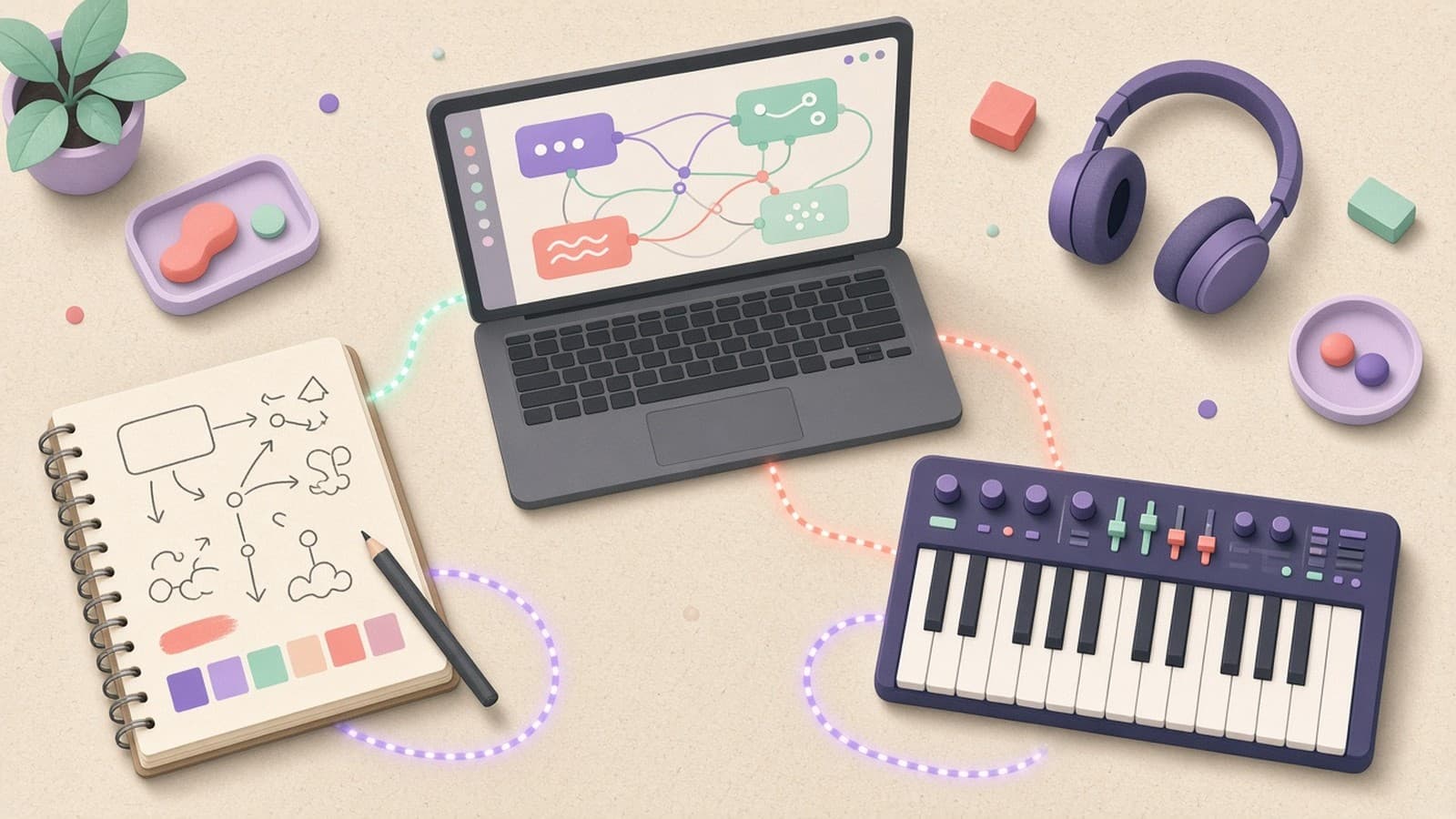
Illustration: FeelArtsy Studio (AI-assisted)
Most AI headlines are about outputs: an image, a song, a paragraph. Two launches at the start of October pointed somewhere more interesting. They're about AI that helps creative people build and fix their own tools.
Comfy Agent: a co-pilot for node graphs
On 1 October, the team behind ComfyUI launched Comfy Agent. ComfyUI is the open, node-based tool that many artists use to build image and video generation pipelines. Its power has always come with a learning curve. Workflows are made of dozens of connected boxes, and when something breaks, finding out why can eat an afternoon.
Comfy Agent is designed to build, run and fix workflows for you. You can describe what you want, and the agent assembles and debugs the graph. It can handle up to five chats in parallel, so you can explore several directions at once. It's live in Comfy Cloud now, in beta, and the company says it is coming to Comfy Desktop "in a few weeks". The company's own phrase for it is "the first agent for craft", which tells you how it wants to be seen: as an assistant to a maker, not a replacement.
Flow Music: vibe-coding your own plug-ins
On 6 October, Google Labs added a feature to Flow Music that's arguably even more surprising. Producers can describe a custom tool in plain language, called a Space, and then export it as a VST3 or AU plug-in. Those are the standard formats that music software uses to load effects and instruments.
In other words, a producer can describe the strange delay, filter or sound-mangler they've always wanted, and use it in their usual software. Google highlighted producer Khris Riddick-Tynes, who built a plug-in called "No Chaser".
Why this matters
Creative tools have always shaped creative work. Painters ground their own pigments, guitarists build their own pedals, and illustrators make custom brushes. What's new is that people who can't write code can now make their own instruments.
There are real questions to keep asking: about training data, about quality, and about what happens to skills when software does the fiddly parts. Those questions sharpened in September, when major labels filed a second lawsuit against an AI music company. But the direction of these two launches is encouraging. The human stays in the loop, making decisions about taste.
For the rest of us
You don't need to be a producer or a prompt engineer to take something from this. The best creative tech gives you more ways to make things that feel like you. Playful, characterful art does the same thing for a room.
Palette
- #2B2D42
- #8D99AE
- #EF233C
- #F7D08A
- #EDF2F4
Sources
Written by FeelArtsy in our own words. AI may assist the draft. A person reviews it before it is published. See the editorial policy.
From the shop
Prints related to this story. House lines, designed by FeelArtsy Studio.

Skater Cat Sticker
Alley Mark
€3.50
A FeelArtsy Studio line
Boombox Buddy Sticker
Alley Mark
€3.50
A FeelArtsy Studio line
Good Vibes Sticker Sheet
Alley Mark
€10.90
A FeelArtsy Studio line

Get the weekly trend letter
One letter a week on art, design, science, and what we printed from it. We store your address as pending and send a confirmation before the first letter. That confirmation email is not going out yet.